Wednesday, June 29, 2022

The Even Older Wal-Mart, West Point, MS (BONUS: Other West Point Retail)

Today's post highlights Clay County, MS, retail.

If any of you have been following my flickr photostream so far this year, you may have seen my album from the West Point, MS, Wal-Mart, which decidedly still deserves that outdated hyphenated name given that the store itself bears not only that logo on the outside, but also one of the last surviving examples of the matching mid-2000s Pre-Impact décor package on the inside. In case you missed it, or if you'd like to refresh your memory, the completed album is located here; but what I didn't tell any of you back when I was uploading those images is that there's an even older Wal-Mart in town, just about three miles down the highway to the north, in fact. 

The current Supercenter building bears the store number 115-03, which to me indicates it's the third location in town; that would make this other store the second, aka the building Wal-Mart occupied from 1997 -- the original, wherever in town that may be, had opened way back in 1976 -- all the way until the circa 2008 opening of the Supercenter. Perhaps surprisingly, perhaps not, that second store building has sat vacant ever since Wal-Mart's departure, and at one point was even advertised for sale on the city website itself. The building has changed very little in that time, and there are several fun old Wal-Mart sights to see in the images below, procured from the various property listings online relating to the building.

This and all images below courtesy LoopNet and other online property listings

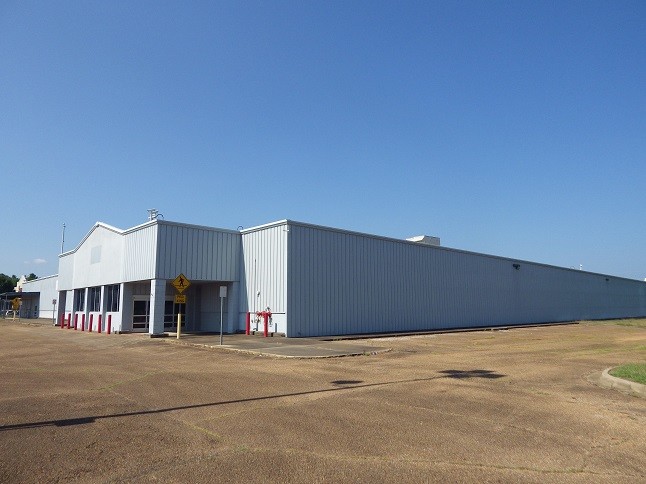
Located off of Alt Hwy 45 at 124 Winchester Drive, the old Wal-Mart is situated fairly far back on the property, and is joined by an accompanying strip center to the left, tenanted by Dirt Cheap, Cato, and It's Fashion, among others. The Wal-Mart building is 58,725 square feet, so the Supercenter was a significant upgrade when it opened. (Also, just out of view to the left in this pic is the old roadside sign for the Wal-Mart, which is still clearly recognizable. You can see that in my flickr teaser image for this blog post here.)


The first image is sadly blurry, but that one as well as each of the following pics shows us some good, full views of the front of the building. Although the architecture isn't noticeably standard, it's still pretty well recognizable as a former Wal-Mart, I'd say. And I'm honestly not even sure if the building was painted out when Wal-Mart left, or if it's been that gray color all along (just minus some red and blue stripes, potentially).


Because the images in this post come from different sources, some of them are of  higher quality than others. Hopefully in the post itself the pixelation isn't too noticeable, but if you try to zoom into some of these or view them full-size, the results unfortunately won't be the best.


The garden center is located at the front left corner of the building, and given the way that it juts out from the building, I'm wondering if perhaps it was a later addition. If not, maybe the design was simply necessitated by the layout of the property.


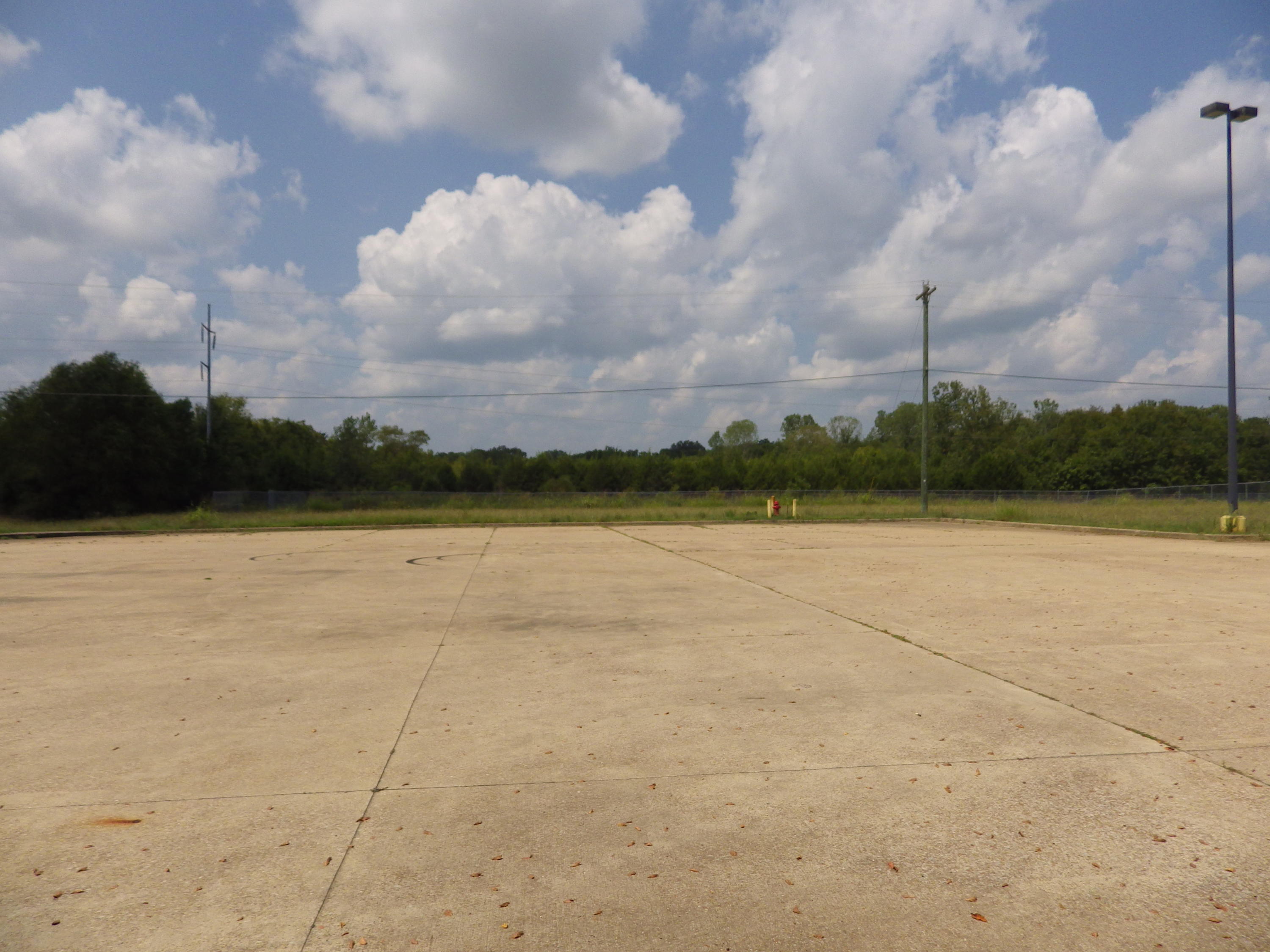
The very empty parking lot out front. The property flyer makes sure to note that there is "132,500 sf of blacktop parking" and that the property presents "endless possibilities." Is that an old shopping cart off to the far right in the bottom image, or something else?



Heading around back for several views of the loading docks, which are located in the back left corner. In that close-up of the docks, you can make out a black décor era "No Idling" sign.


Coming back around the side of the building, before returning once more to the loading docks in the following photos. The listings really seem to emphasize the loading docks, likely in part because the next logical use for the property would seem to be as a warehouse space. The building itself is well-suited for that, and I would imagine it wouldn't be that awful difficult to add in several more loading docks as needed, either.


Here are those aforementioned views-aplenty of the loading docks. I really don't have a lot to add to these, but for those who are interested in seeing them, I didn't cut a single shot out of this post. (You're welcome, loading dock fans!)


Finally back around front. In several of these images but especially this last one in particular, we can make out several still-surviving labelscars from the Wal-Mart days, which is part of why I suggested above that the building may always have been this color (because how else would the labelscars show through a new coat of paint so well?). From right to left (all left of the main entryway façade), we see "Satisfaction Guaranteed," "We Sell For Less," and "Garden Center." It looks like there may be another labelscar above "Garden Center" as well? My first instinct is to think "Tire & Lube Express," but in all those views of the side and back of the structure, nothing really stood out to me as a tire department... and keep in mind that the quote-unquote "new" Supercenter location does not have a tire center of its own, either.


Aha, now here's where the fun really begins! At least one of the sale listings provided interior photos of the abandoned building, and we find that the interior is very much recognizable as a former Wal-Mart. It may be a little tough to zoom in and see all these small details in these pictures, but I hope you'll give it a shot just for good times' sake. Our first remnant in this pic of the vestibule are the red stickers on the automatic doors. It looks like the one closest to us might read "Please Use Other Door," in which case it would make sense for the opposite one to read something like "Enter Here" (although I can't make either of them out clearly enough to be positive).


Inside, we find that the old tile flooring as well as the apparel departments' carpeting is still totally intact, right down to the (faded) red stripe and the (equally faded) former clothing rack placements. I believe that first pic is looking from immediately inside the entrance doors -- in the front right corner -- across to the back left of the building, while the bottom pic looks straight back, down the right-side perimeter wall.


The top pic here looks across the front end, while the bottom one looks from the rear of the store back up towards the front (the main entrance is where all that sunlight is coming from). Check out the carpeted support poles! And the amazing "Always" logo and slogan still hanging on on that wall on the left side of the bottom pic!!


Some more views from the back wall. I can definitely identify the first one as looking straight up the center of the store towards the front wall, but I can't 100% place the second image within the salesfloor. One thing I will point out is that this store definitely has a very warehouse-like feel, long before I thought Wal-Mart (or really any major retailers, for that matter) decided to adopt large, open warehouse ceilings. Is it possible that this store used to have a drop ceiling, only for that to be removed after the store closed? But if that's the case, why go to that effort without removing any of the other obvious Wal-Mart relics?


This pic gives us a really good, close look at the structure at the center of the front end, clad in that characteristic Wal-Mart blue, but unfortunately it still doesn't provide us with very many clues as to what purpose this structure actually served. Was it customer service? A café of some sort? If you have any idea (or are familiar with old Wal-Mart stores of this era in general and can provide comparisons to other locations), please let me know in the comments!
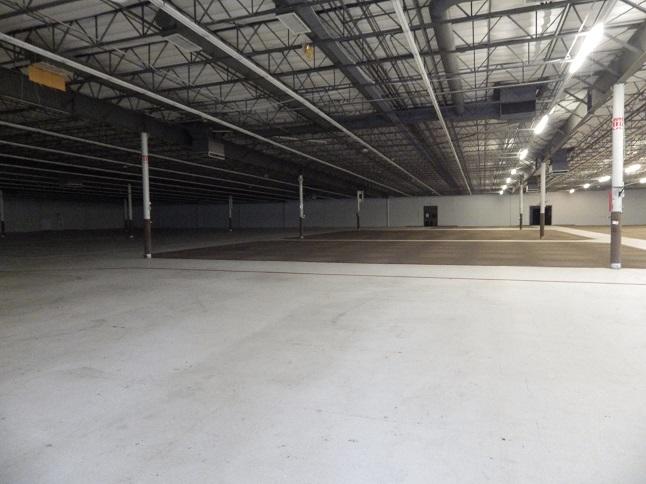
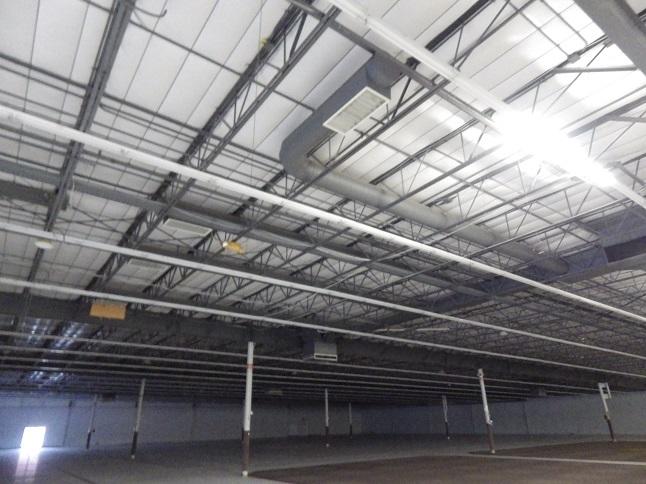

A couple more pics of the interior, with the bottom one focusing deliberately on the warehouse ceiling. All the carpeting we're seeing would seem to indicate that a good majority of the space was home to apparel, which I suppose makes sense for a general-merchandise Wal-Mart. Surely the variety of goods available in West Point, especially groceries, increased dramatically when this store closed and relocated to the Supercenter down the street.


Our final pic of the old store is one of the best: I'm not sure what exactly the photographer was trying to focus on when taking this pic, but I'm glad s/he took it, because there on the very upper left edge we catch a glimpse of the old "Thank you for shopping your Wal-Mart" sign, albeit with the "Wal-Mart" portion itself whited out (but still visible as a ghost!). I bet it's likely that the phrasing was really "...your West Point Wal-Mart," actually, which is always fun to think about!

So that completes our mini-tour of the former Wal-Mart in town, to complement our much fuller tour of the Supercenter itself over on flickr. (For completeness purposes, two more internet-sourced images of the Supercenter location are presented below, in addition to all of the images of my own in that album.) I hope y'all enjoyed seeing the classic traits of this building as much as I did, and again, if you have anything to add or share about Wal-Mart and/or West Point, please feel free to do so in the comments! 

Courtesy Clark Construction

Courtesy Clark Construction

Blog contributor and West Point native publisher73 has one final thing to add concerning the West Point Wal-Mart saga... in a very fortuitously timed email he sent me yesterday, he let me know that the Supercenter has recently -- and very sadly -- received Walmart's newest blue and gray paint scheme, erasing the nostalgic and rare(ish) green and tan coloring it had before. You can see that in the image below. The old logo is still hanging on for now, but honestly I don't know if I want it to survive long-term, since it definitely doesn't look all that great against the new paint scheme!

Courtesy publisher73

publisher73 writes, "The interior is the same layout and design (so far) and the old signage is still up (another oddity). I'm sure the latter will change soon enough, but they don't appear to be in any hurry." So it would seem that the first-ever (?) remodel for the West Point Wal-Mart may well be imminent... quite a shame, but I suppose it had to happen sometime; and if nothing else, it's an accomplishment that the store survived untouched for as long as it did. And at least I can be happy that I had the opportunity to document the store and share it with you guys, too!

--------------------------------------------------

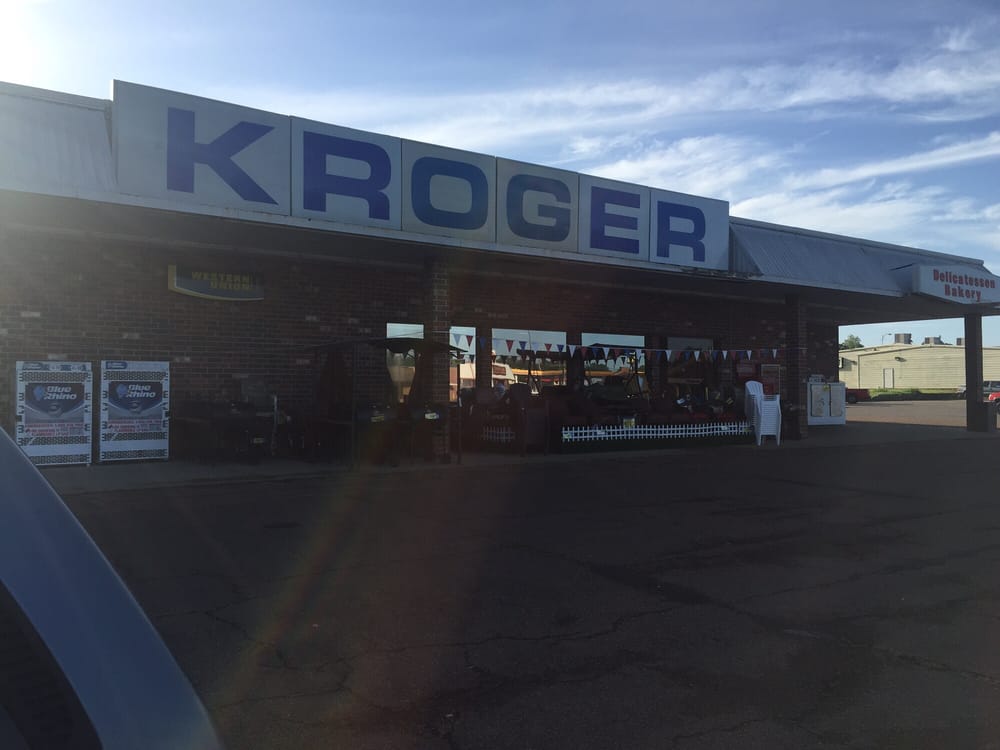
Before concluding this post, I wanted to share just a couple of other fun West Point retail sights. As it turns out, the Wal-Mart(s) aren't the only classic things in town! First of all is the former Kroger, which operated until the Delta Division decided to close it down in August 2015. As you can see in the images below, the store was from the superstore era, and still had classic exterior signage as well as the wannabe neon/grid interior décor. The store had been around for 40+ years, and later became a Save-a-Lot, which didn't do much to the exterior but surely remodeled the interior beyond recognition. Save-a-Lot appears to still be open today, which is nice to see.

Courtesy Internet Archive

Courtesy Mapquest

Courtesy Foursquare. Check out the old diamond-shaped "Delicatessen/Bakery" sign!

Interior pic showing traces of wannabe neon décor in the background. Courtesy Foursquare

VERY faded cube sign! From looking at Street View, it looks like it's still standing today, but with the faces taken out (Save-a-Lot chose not to reuse it). Courtesy LoopNet

Save-a-Lot coming soon banner and sign installation, 2018. Courtesy Google Maps

And finally, a refreshed storefront pic. Courtesy Google Maps

Last but not least, a single Google Maps screenshot of the McDonald's in town to close us out. Not only does this McDonald's still have a mansard roof, it's a copper mansard roof at that... and it comes complete with some golden arches on the patio, to boot! I'd definitely like to check this out if it's still around whenever I may find myself going through West Point again, and I'd probably also be interested in seeing the current state of the Wal-Mart at that time, too.


A reminder that I'm still on hiatus from flickr for another couple weeks or so, but I hope to be back in full force come mid-July. Ideally I'll also have another blog post ready for y'all at some point next month, too, but we'll see. Thanks as always for being patient with me, and for following my content over on flickr and here on the Mid-South Retail Blog! Until next time, then, I hope you have a happy and safe Independence Day weekend, and have fun exploring the retail world wherever you are...

Retail Retell

Saturday, May 21, 2022

"The Hut," Madison, MS

It's January 2020. I'm settling into my temporary home in Madison, MS, as I begin my internship, two months before the internship concludes and I accept an offer to return full-time, nineteen months before I move to Ridgeland and do just that. I hadn't really gone out to explore any local cuisine just yet, but on this particular day I head down the road to pick up some Pizza Hut. Yes, I know -- Pizza Hut is far from the ideal first choice for a restaurant outing in a new town. Pizza Hut isn't even my favorite amongst all the different chain pizza joints. But this particular Pizza Hut had caught my eye. This wasn't just any ordinary Pizza Hut, you see. It's special. Not just a Pizza Hut... this is The Hut.

--------------------------------------------------

The Hut

It's June 2009. Pizza Hut executives are strategizing how to combat the chain's significant decline in sales amid the recession. In addition to introducing healthier ingredients like multigrain crust and all-natural tomato sauce, the executives decide that one way to win back customers is to introduce a new brand image. Out is the old, burdensome, clunky name "Pizza Hut." In is the new, shorter, more accessible "The Hut."


The truncated name "ties in nicely with today's texting generation," explained Brian Niccol, Pizza Hut CMO. "We wanted to make sure that Pizza Hut and 'The Hut' become common vernacular for our brand." Spokesman Christopher Fuller echoed the sentiment: "We think that 'The Hut' is to Pizza Hut as Coke is to Coca-Cola."

For their part, Pizza Hut's consumers did not, in fact, share this sentiment. In fact, most of them lambasted the effort, and Pizza Hut quickly clarified that "The Hut" was intended just as a nickname, not as a full rebrand. The Pizza Hut name would remain on its stores and as the official name of the company. Nonetheless, certain locations did receive "The Hut" rebrands, and the pizza-less moniker also adorned some newly redesigned, bold red packaging for a brief period. 

Image courtesy idsgn

Image courtesy idsgn

"iHut." Even worse. Image source unknown

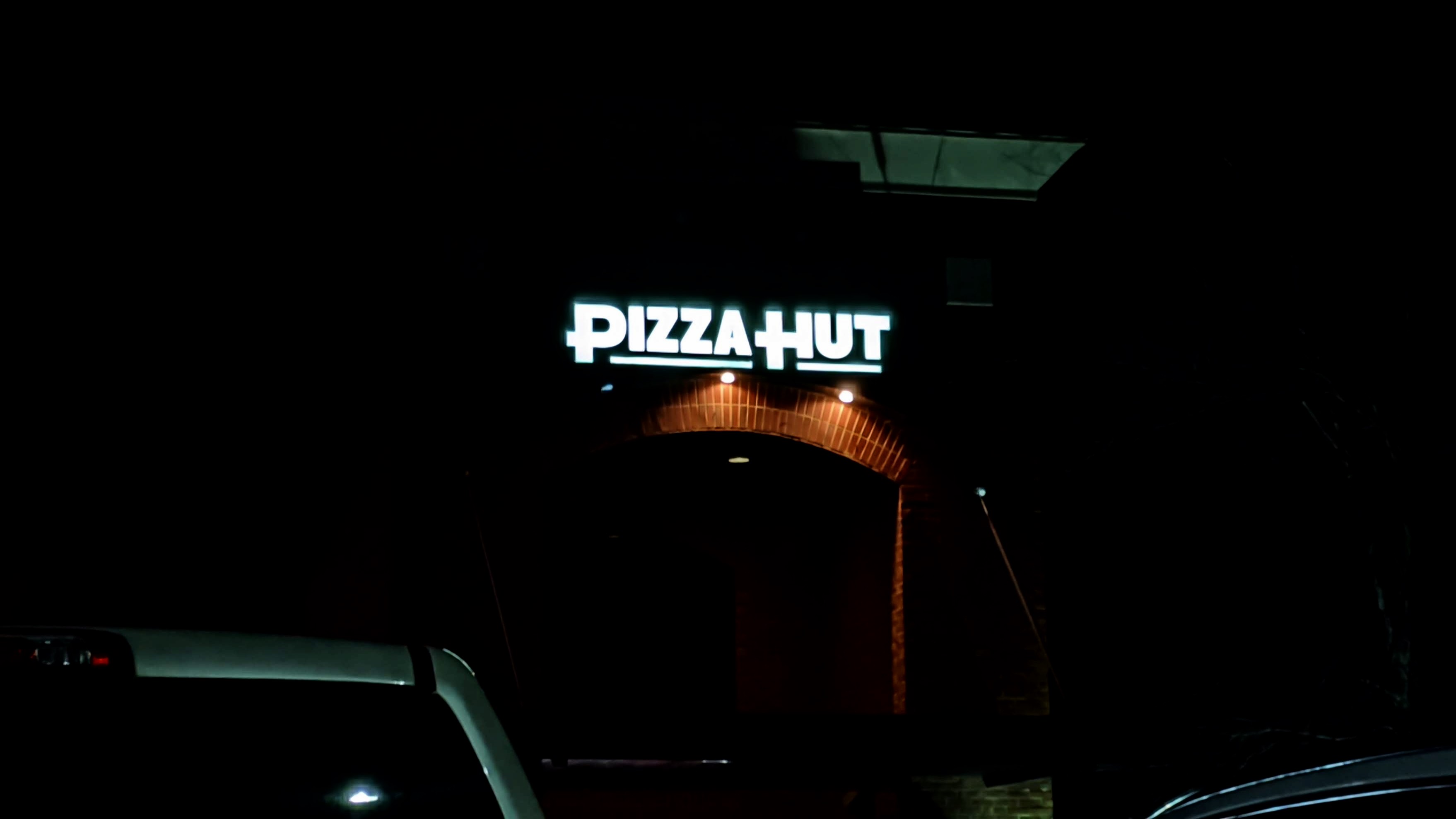
Ultimately, though, it's clear to see that this experiment was painfully laughable and a fast failure, a mostly-forgotten piece of Pizza Hut's history. Except, that is, at a select few locations such as the Pizza Hut on Highway 51 in Madison, where the strange wordmark still resides on the exterior of the building and a long-outdated mural of "The Hut" greets customers on the interior wall. The intention of the name may have been to signify that the restaurant serves more than just pizza, but "The Hut" doesn't particularly evoke a restaurant that serves food at all.

Exterior view

Close-up of the logo. Note that this location used the full "Pizza Hut" wordmark, which is likely why there hasn't been any more urgency to replace it with a newer logo over the years.

Interior mural, daytime

Interior mural, nighttime. I picked up a menu during the day so as to have an excuse to visit twice. Yes, I lead an exciting life.

Logo lit up at night

--------------------------------------------------

The Shack

It's August 2009. In another corporate boardroom somewhere, RadioShack executives have decided that their company, too, needs a boost. And what better way to do that than to reinvent their brand image so that it better appeals to younger consumers? Radios are such an outdated thing, in the age of netbooks and the revolutionary new Windows 7. RadioShack, it was decided, needed to ditch the radio. In turn, the company would become known solely as "The Shack."


Naturally, many consumers and media outlets couldn't help comparing the introduction of "The Shack" to that of "The Hut," which was still fresh in everyone's mind from only two months earlier. "So while Pizza Hut is starting to call themselves The Hut, RadioShack is now toying with the idea of The Shack," wrote Eli Altman of A Hundred Monkeys. "Is it just me, or is this slowly starting to spiral out of control? Let's take bets on when Burger King becomes The King, or when Wal-Mart becomes The Mart and Safeway and Subway are deadlocked in a legal battle for The Way. I know times are tight, but contrary to popular belief, cutting your name in half won't save you any money.

"While the concept of blending in and commodifying your company might sound good in theory, it's actually very hard to pull off," Altman continues. "For The Shack and The Hut, it comes down to the difference between what they say and what they do. Nothing about RadioShack feels like a shack and nothing about Pizza Hut feels like a hut. There's too much plastic and cheap carpet. Let's not forget that huts and shacks aren't that cool anyway. Of all places to get a pizza, would you go to a hut? No. If you were looking for a flux capacitor or some other little electronic gizmo, is that something you think you'd find in a shack? No f'ing way."

For his part, RadioShack CMO Lee Applebaum defended the name change by stating that "Our customers, associates, and even the investor community have long referred to RadioShack as 'The Shack.' So, we decided to embrace that fact and share it with the world. The Shack speaks to consumers in a fresh, new voice and distinctive, creative look that reinforces RadioShack's authority in innovative products, leading brands, and knowledgeable, helpful associates."

Applebaum's defense didn't really do much to quell the taunting, though. As a matter of fact, Mark Simon Burk of Make Brilliant Ideas noted that he started asking around, "and despite what agency Butler, Shine, Stern & Partners claim, we haven't found a single person who ever called it 'The Shack.' And though the agency maintains it's an employee inner circle term, none of the employees at our local RadioShack ever use it. Or at least, they don't admit to using it."

Vocalizing the comparison on everyone's minds, Burk continues, "You'd have thought agency and client would have learned a lesson from Pizza Hut when it tried to become The Hut, as in the cool place where everyone comes to hang. But so goes the myopia of most brands. It's hard for them not to see themselves as the center of their universe."

The thing is, RadioShack's rebrand could have stopped there and ultimately made it off fine. Pizza Hut became a laughingstock for a while, but never really went all-in on The Hut and ultimately was able to continue operations as normal, with most consumers forgetting the ill-fated name change ever existed. The Shack, on the other hand, devoted the majority of its $200 million advertising budget in 2009 to its new, "cool, hip" personality. Which, of course, made it much harder to forget, inviting even more ridicule. As you'll see below, The Hut was relatively innocuous compared to The Shack, which successfully reached multiple levels of cringeworthy.

Image courtesy Marketing 3.0

"'Our friends call us The Shack.' So claims the newly rebranded RadioShack in an attempt to be down with the kids," wired.com wrote. "It's almost embarrassing, like seeing your grandfather listening to an iPod and riding a single speed track bike. Wait, that would actually be cool."

Eli Altman, from above, agreed, asking, "Since when does trying to sound younger appeal to younger people? Trying to be younger is, like, something old people do." Randall Hull from The Br@nd Ranch opined, "The current trend to truncate brand names is puzzling. Is this an attempt to beguile the text-message obsessed youth market, where everything is 'abrv8d'? Or drive up sales through brand-brevity because we lack long attention spans?"

For a failed marketing initiative over a decade old, I was able to locate a surprising amount of The Shack propaganda online. And it's bad. Real bad. Shopping bags read "The Shack thanks you"; gift cards proclaim "The Shack has been gifted." Don't say I haven't warned you before you check out this website and the images below.

Shopping bag. Image (ironically) courtesy TheStreet

Gift card. Image courtesy Colnect

The Shack branding inside a store. Image source unknown

There are so many things wrong with this. Image source unknown

I have no words. Image courtesy Danica Himberg

--------------------------------------------------

The City

It's October 2007. The Hut and The Shack are both just unborn ideas in some executives' heads, not to materialize for another half of a year at least. Electronics giant Circuit City has stepped ahead of the game. This month, they announced plans to test "new concept stores dubbed 'The City,' with a new look and interactive layout in an attempt to give customers a new shopping experience."


It might be out of line for me to speculate on this, but based on the research I've done, it seems that The City had a much better value proposition behind it than either of The Hut or The Shack. That's because the latter two seemed mostly focused on reinventing the brand image alone, with little to no change to the existing business; whereas for The City, the retailer was experimenting with an entirely new store format. Wrote Alan Wolf in January 2008:

The concept stores embody "a portfolio of ideas" culled from two years' worth of "innovation work" in the company's Boston and Miami lab stores, said Steve Pappas, small-stores president and point person on the project. ... [At 20,000 square feet, The City's] smaller footprint is more productive than the chain's typical 33,000-square-foot box, Pappas said, thanks to shrinking product dimensions. The new stores are also merchandised more efficiently, with narrower but deeper assortments of best-selling, high-margin products. Modular fixtures allow The City stores to quickly alter the mix as demand changes. ... "It's very early on in the process, but we've had very positive feedback," Pappas said. The City "allows us to look at trade areas in a different way," giving the company greater flexibility to enter new markets and backfill existing ones. While Pappas was mum on the company's long-term plans, he said most Circuit City stores opening in 2009 will likely be in The City format.

"The City" exterior. Image source unknown

Newly redesigned interior. Looks pretty good! Image source unknown

"Find your rhythm in the city." Yep, can't wait. Image courtesy Momentum Design Studio

For some reason I can't help but be reminded of this as I look at this picture. Image courtesy Record Online

Of course, The City, like The Hut and The Shack, wasn't long for this world. Circuit City went bankrupt and ceased operations in 2009, rather than opening the projected 75 to 100 new stores that year. And while this company's adaptation of "The Name" wasn't without its own overblown copy designed to hype up the rebrand -- this redesign website describes the new interior as "Think Apple store meets high school science lab with a free-flowing layout and the coolest technology everywhere you look" (see also the bottom two images above) -- I still stand by my statement that The City had the highest promise out of any of these three failed initiatives. 

Yes, the name was a joke. Circuit City was no less subject than Pizza Hut or RadioShack to the risks that came with shortening its name: "Giving a nickname for a brand, it's a tricky thing," chief creative officer at The Brand Union, Richard Bates, said at the time. "If a client does it or a consumer does, it's a way to claim ownership. If you impose it... there's a little bit of danger." Likewise, any backlash Circuit City got for the name was just as rightfully earned as the poor responses to Pizza Hut and RadioShack's attempts. But at least The City had a well-thought-out, innovative new store format to go with it... and not just an ill-conceived desire to try and integrate a younger, cooler version of itself back into people's lives.

--------------------------------------------------

Other "The"s


Despite the questionable choices and branding failures referenced above (both The Hut and The Shack landed on this list of "5 of the worst rebranding disasters"), other companies over the years have continued to decide that taking some shortened part of their name and sticking "The" in front of it is, for some reason, still a desirable marketing effort. In their defense, at least, some of these brands have had better success than The City, The Hut, or The Shack. A few examples are highlighted below.


In 2015, Denny's debuted "The Den," a fast-casual concept aimed at hitting "the sweet spot for Millennial diners." Greg Powell, Denny's vice president of concept innovation, expressed, "This is meant to be a concept we can take to Millennials, not only on college campuses but in urban centers and other places" where presumably the creatures may be found in their natural habitats: "It's a Denny's built for them." Reinforcing the idea that Millennials are somehow an entirely separate species, the menu was reconfigured to feature, among other things, a line of "Millennial-friendly" breakfast burgers, and yes, that's an actual quote.

Currently, according to their website, The Den has five locations across the US, all on college campuses. I'm unsure if these locations no longer exist or if they simply aren't advertised publicly on the website (which would make sense), but it's worth noting that the National Restaurant News article I'm referencing also points out that the Den is "expanding at military bases." Powell, for his part, concedes that military members are "a different demographic" than Millennials, but maintains that the concept is still relevant to that application. (What a relief.)


In late 2019, Big Lots debuted "a new merchandising effort dubbed 'The Lot' in six stores, part of a transformational journey the retailer refers to as Operation North Star." Since that time, the concept seems to have expanded chainwide, as evidenced by my discovery of The Lot at the Southaven, MS, store, as pictured above from July 2020. According to Big Lots CEO Bruce Thorn, "The Lot will be an innovation engine for the store, bringing newness, freshness, and novelty with traffic driving assortments in new categories like apparel that expand our right to play." Because, naturally, it is entirely feasible that an inanimate corporate entity exists in some physical form and, moreover, has determined it must demonstrate an affinity for whimsy in order to win over more consumers.


This one, at least, has existed for a long time before The City, The Hut, The Shack, The Den, or The Lot (any other "The"s y'all can think of?). In fact, the image above is a screengrab from their 2001 (!) annual report. I think "The Zone" has found success where a majority of those others have not because it's been in use for such an established period of time and, specifically, its use has been primarily as a slogan, not as an outright replacement of the "AutoZone" name. It also helps that it's got that catchy jingle that goes along with it.


Finally, our last "The" example isn't a business, but is at least a businessman. I also have no clue how or why this name came about, but it seems to have stuck. Technically, he also held another "The" title for four years. But this isn't a politics site, so I won't go any further on that.

--------------------------------------------------


Thanks, as always, for reading The Blog. Until next time, have fun exploring the retail world wherever you are!

Retail Retell